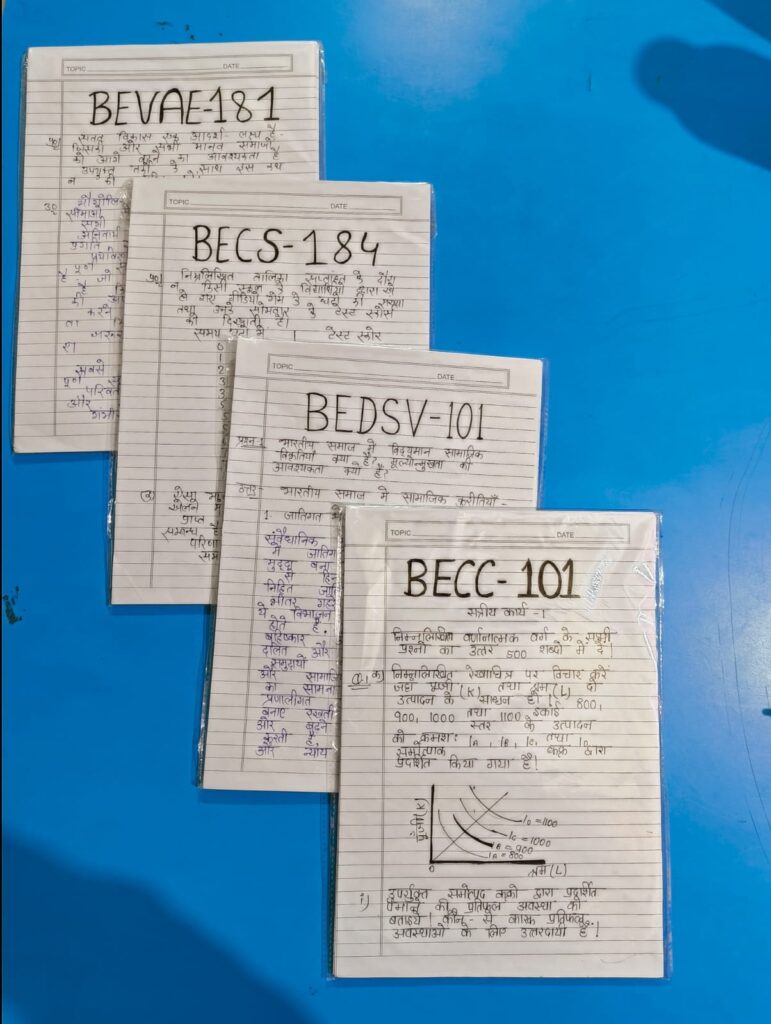
A well-structured assignment makes your ideas easier to understand and helps present your knowledge in a clear and organized way. Good structure, relevant content, and proper presentation can make your assignment more effective.
Simple Formula:
➡️ Introduction → Main Content → Analysis → Conclusion → References
Quick Tips:
🔹 Start with a clear and relevant introduction.
🔹 Use proper headings and subheadings to organize your answers.
🔹 Address each question directly and stay focused on the topic.
🔹 Support your points with relevant examples, facts, or explanations.
🔹 Show your own understanding instead of simply reproducing information.
🔹 Write a clear conclusion that summarizes the key points.
🔹 Mention sources and references appropriately wherever required.
🔹 Follow the prescribed word limit, question numbering, and submission guidelines.
🔹 Keep the assignment neat, readable, and consistently formatted.
❓ FAQ
Q. Can a good structure help improve assignment marks?
A. A clear structure makes your answers easier to follow and evaluate. However, marks depend on the quality, relevance, accuracy, and completeness of your content.
Q. Should I use headings and subheadings?
A. Yes. Relevant headings and subheadings can make your answers more organized and reader-friendly.
Q. Is the same structure suitable for every question?
A. Not always. Adapt the structure according to the question, subject, and assignment requirements.
⚠️ Disclaimer:
This post is for general educational guidance only. Always check the latest IGNOU and programme-specific instructions before preparing or submitting your assignment.